
Will-Call Restored Nurse Call Access for a Resident with MS
Will-Call brings voice-powered peace of mind to a long-term MS patient at The Reserve at Richardson, where traditional call systems fell short
Background: A Long-Time Advocate, A Lifelong Friend
Harold has been an unwavering healthcare advocate for over 15 years, but his most personal case is one close to home. His close friend, a resident at The Reserve at Richardson, has been bedridden since 2013 due to multiple sclerosis (MS), a progressive neurological disease that has slowly taken away her physical mobility. Over time, she lost the ability to use her arms, making traditional nurse call systems impossible to operate.
Despite her condition, one thing remained consistent, her voice. It became her last and most important tool for communication and safety.
Facility Overview:
The Reserve at Richardson is a 129‑bed skilled nursing and rehabilitation community in Richardson, Texas. The facility provides personalized, around‑the‑clock clinical support in a comfortable, home‑like environment, with individualized care plans that focus on recovery, dignity, and overall well‑being. Services include skilled nursing care, rehabilitation therapies such as physical, occupational, and speech therapy, respiratory care, and long‑term support for residents with complex medical needs.
The Problem: Physical Limitations and Failed Alternatives
Before discovering Will-Call, the team tried multiple assistive options:
A standard push-button nurse call device, which she could no longer press.
A touch-sensitive pad pinned to her pillow, positioned close to her head but even that setup failed to deliver reliable results.
The shared room setup created additional complications. Her roommate was often loud, which introduced concerns about false triggers if a voice-activated system was introduced.
The Referral That Made the Difference
Interestingly, it wasn’t a clinician or supplier that introduced them to Will-Call. Another resident at the same facility, who faced similar mobility challenges, was already using Will-Call successfully and suggested they try it too.
That recommendation prompted Harold to reach out and order a unit through the Will-Call website. From there, the Will-Call team connected with Harold to better understand the resident’s environment and needs.
The Solution: A Voice-Activated System
Will-Call was installed and configured with minimal disruption. The device was placed near her bedside, and after some trial and error, the team found that using an extension microphone positioned closer to her head dramatically improved responsiveness.
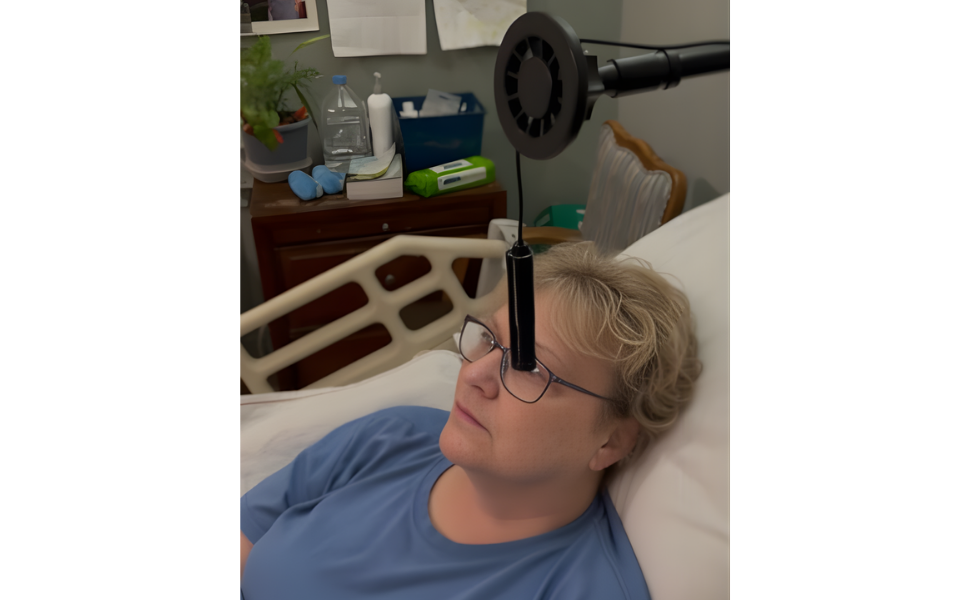
Microphone extension for better accuracy.
Despite the ambient noise in the room, Will-Call accurately detected the resident’s voice without false triggers. Its voice recognition software was able to isolate her commands, giving her a reliable way to call for help—hands-free.
To further support ease of use, the unit was installed with a visual placard reminding the resident of the activation phrase:
“I need help.”
“We had tried everything, and nothing worked consistently. Will-Call gave her control again—and gave me peace of mind knowing she could ask for help on her own terms”
Impact: Safety, Independence, and Confidence Restored
For residents with advanced MS, every inch of independence counts. Will-Call gave this patient something other systems couldn’t: the ability to summon care using her own voice, even as her physical condition progressed. It also brought emotional relief—both to her and to Harold—by removing the constant worry that she might not be able to reach anyone in an emergency.
Harold continues to advocate for solutions that truly work for patients with progressive conditions. His story is a reminder that the best ideas often come from within the care community itself.
Key Highlights:
Hands-free voice activation using “I need help”
Works reliably even in a shared, noisy room
Quick bedside setup with extension microphone
Recommended by another resident in the same facility
Visual prompt included to support memory and ease of use
Learn More
Explore how Will-Call works with legacy and modern systems alike at will-call-nurse.com