
How a DMD Patient Regained Reliable Access to Care with a Voice-Activated Nurse Call.
Will-Call provided a hands-free, voice-activated nurse call solution for a patient with Duchenne Muscular Dystrophy (DMD) who could not reliably use a traditional call light in a care facility.
Background: Living with Duchenne Muscular Dystrophy
The patient was diagnosed with Duchenne Muscular Dystrophy (DMD) at a young age, a condition that causes progressive muscle degeneration and severe loss of mobility. Today, he has limited movement, with control of only a finger and thumb on each hand, and depends on others for all aspects of daily care.
At 22, after losing his mother to COVID, his grandmother became his primary caregiver. When her health declined, his younger brother stepped in. Eventually, he transitioned into an assisted living facility to receive 24-hour care.
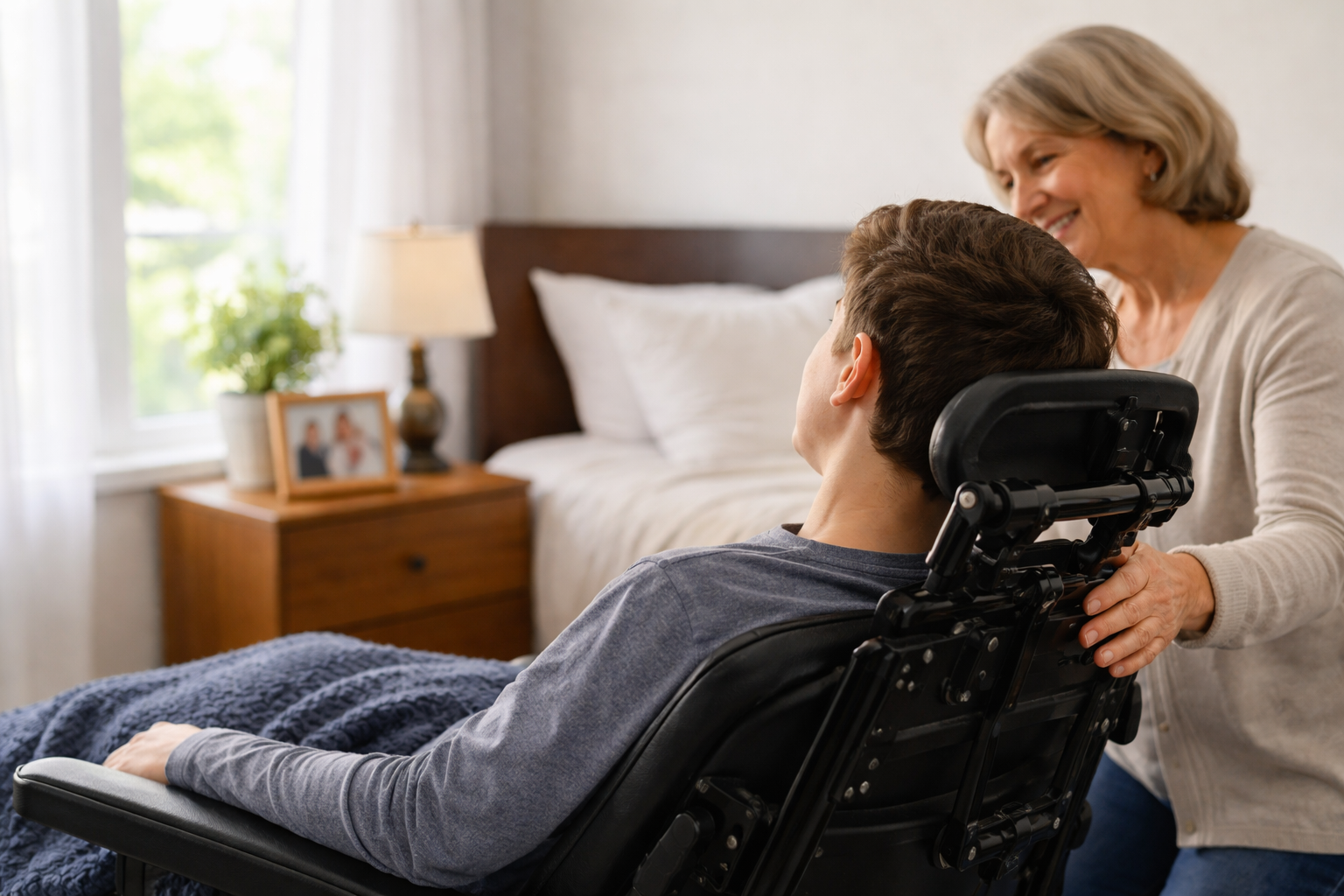
IInspired by our patient’s story of living with Duchenne Muscular Dystrophy (DMD) and regaining reliable access to care through a voice-activated nurse call solution
The Problem: Inability to Use a Traditional Call Light
Despite being in a care facility, he faced a critical challenge. He could not reliably use a standard nurse call button.
Pressing a button required physical effort he could not consistently perform
Missed calls created delays in care
There was no dependable way for him to independently alert staff
For patients with limited mobility, this is more than inconvenience. It is a safety risk.
How They Found Will-Call
The patient’s grandmother found Will-Call through a Facebook group while searching for a better way for him to call for help. She had already seen how difficult it was for him to rely on a traditional call light and was looking for something that could work with his limitations.
After seeing a post about Will-Call, she reached out directly to Bob Kaiser on Facebook. He connected with her soon after and took the time to understand the patient’s condition, how he was currently attempting to call for help, and the setup within the facility.
From there, the Will-Call team worked closely with the family and the facility administrator over the next couple of months to ensure the system would integrate smoothly and function reliably in his environment. The focus was not just installation, but making sure the system would work consistently in real use.
The Solution: A Voice-Activated Nurse Call Configured for Real Use.
Will-Call was installed as part of the 30-day free Test Drive Program. It functioned as a hands-free call light tailored to the patient’s environment and physical limitations.
Working closely with the caregiver and facility administrator, the system was configured to integrate with the existing nurse call infrastructure so staff could respond through their standard workflow.
To improve accessibility, a microphone extension was added and positioned near the patient, ensuring his voice could be clearly detected without requiring physical movement.
Once set up, he could call for help using a simple phrase: “I need help.”
No buttons. No reaching. No dependence on hand movement.
The system operates within the facility without relying on Wi-Fi or internet connectivity, ensuring consistent performance when it matters most.
“This technology has been a true blessing. It has restored my grandson’s ability to communicate his needs and brought our family peace of mind. The support from the Will-Call team has been exceptional. We strongly encourage anyone looking for a voice-activated nurse call system to consider this solution.”
The Impact: Independence and Peace of Mind Restored
The change was immediate. He now uses Will-Call every day, and it has become a dependable part of his care routine.
Care staff can respond more consistently, without delays caused by missed or incomplete call attempts. What used to be uncertain is now predictable.
For patients with limited mobility, this shifts access to care from being effort-dependent to being reliable.
For the family, the difference is clear. They no longer worry about whether he will be able to reach someone when he needs help. They know the system works in his environment, and that consistency has brought a level of reassurance that was missing before.
Key Takeaways
Traditional call lights may not work for patients with severe mobility limitations, even in assisted living settings
Will-Call provides a voice-activated nurse call solution that allows patients to call for help without physical effort
Setup matters. With Will-Call, microphone placement and extensions can be adjusted to fit real patient environments
Close coordination with caregivers and facility staff helps ensure Will-Call works reliably from day one
Will-Call integrates with existing nurse call systems, so staff workflows remain unchanged
For families, the biggest value of Will-Call is peace of mind, knowing their loved one can consistently reach help when needed